Leading Through Change: A Change-Readiness Checklist for Leaders
Most change efforts fail because the organization wasn't ready, not because the idea was wrong. Use this 15-question checklist before you announce.

Every change looks clean on the project plan. The new system goes live on the first of the month, the new structure takes effect after the all-hands, the new process starts Monday. Then reality arrives: people find workarounds, supervisors quietly keep the old way going, and six months later leadership is wondering why the change "didn't take."
Most change efforts don't fail because the idea was wrong. They fail because the organization wasn't ready to absorb it, and nobody checked. This post gives you a practical change readiness checklist you can use before you announce anything, plus guidance on what to do with the answers.
Why readiness matters more than the plan
A change plan answers the question "What are we doing and when?" A readiness check answers a different question: "Can our people actually do this, and do they believe it's worth doing?"
Those are not the same thing. A team can have a perfect implementation timeline and still be exhausted from the last three initiatives, unclear on why this one matters, or led by supervisors who privately disagree with it.
It's also worth remembering where most organizations start. Gallup's State of the Global Workplace report found that global employee engagement fell to 20% in 2025, and manager engagement fell from 30% to 27% in 2024. If the managers who are supposed to carry a change are themselves disengaged, the change has a steep hill to climb before it begins.
The change readiness checklist
Work through these questions with your leadership team before the change is announced. Be honest. A "not yet" now is far cheaper than a failed rollout later.
Clarity
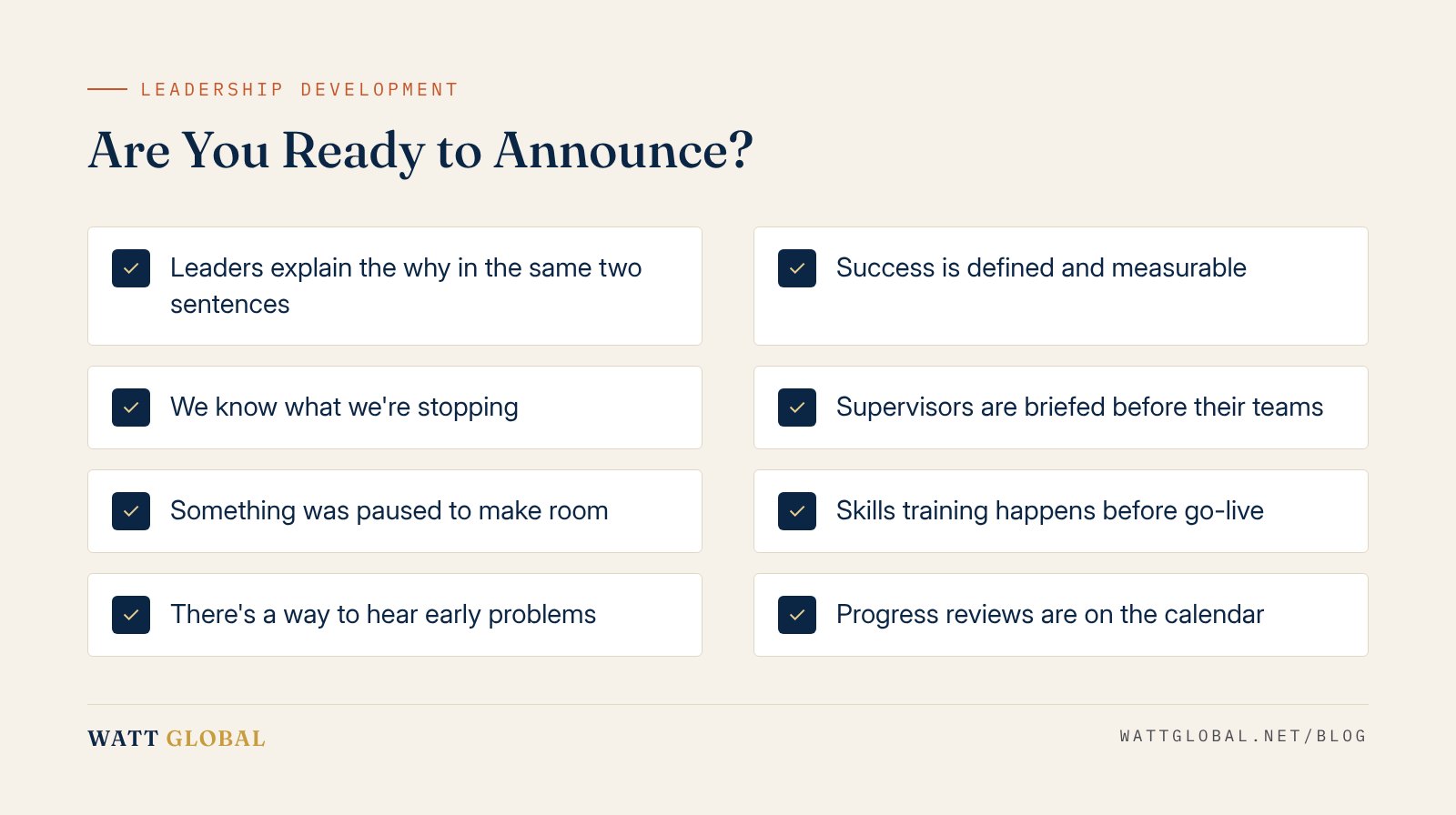
- Can every senior leader explain why this change is happening in two sentences — the same two sentences?
- Have we defined what success looks like and how we'll measure it?
- Do we know what we're stopping, not just what we're starting?
Leadership alignment
- Does every senior leader actively support this change, not just tolerate it?
- Have frontline supervisors been briefed before their teams hear about it?
- Do supervisors have answers to the first five questions their people will ask?
Capacity
- What else is changing for these same people in the next six months?
- Have we removed or paused anything to make room for this?
- Do people have time set aside to learn the new way of working?
Capability
- Have we identified the specific new skills or behaviors this change requires?
- Is there a plan to train people in those skills before go-live, not after?
- Is there someone people can go to when they get stuck?
Feedback and reinforcement
- How will we hear early if the change isn't working on the ground?
- When will leaders review progress, and what will they look at?
- How will we recognize the people who adopt the change well?
If you can't answer three or more of these with confidence, pause and close those gaps before you announce. It will feel like a delay. It's actually the fastest route to a change that sticks.
The supervisor test
If you only have time for one readiness check, make it this one: talk to five frontline supervisors who will carry the change. Ask them three things:
- What do you understand this change to be, and why is it happening?
- What will your team's biggest concern be?
- What do you need from us to make it work?
Their answers will tell you more than any survey. If the explanations don't match, or their teams' concerns surprise you, you've found your readiness gap before it became a rollout problem.
Supervisors matter so much because they translate every change into daily reality. People rarely judge a change by the CEO's announcement. They judge it by how their own supervisor talks about it on Tuesday morning.
People don't resist change nearly as much as they resist confusion. Clear the confusion first, and much of the resistance goes with it.
Turning the checklist into action
Once you have honest answers, the next steps usually fall into four groups:
- Clarity gaps: Write a simple, shared explanation of the why, the what and the what-we're-stopping. Have every leader use it.
- Alignment gaps: Have direct conversations with leaders who are lukewarm. Unspoken disagreement at the top becomes open resistance on the floor.
- Capacity gaps: Pause or drop something. Adding change on top of a full load is the most common reason people quietly revert.
- Capability gaps: Build short, practical training into the timeline before go-live, including how to handle the difficult conversations the change will create.
Resist the urge to fix everything at once. Pick the two or three gaps most likely to derail the change and close those first. A shorter list that actually gets done beats a long remediation plan that nobody has time to follow.
It also helps to decide, in advance, what would make you delay the launch. Picture a hospital unit preparing to switch scheduling systems. The leadership team agrees that if most charge nurses haven't completed hands-on practice two weeks before go-live, the date moves. Setting that rule early takes the emotion out of the decision later, when pressure to "just launch" is highest.
A 90-day rhythm for leading change
Readiness isn't a one-time box to tick. Once a change launches, keep a simple rhythm going:
- Days 1–30: Leaders are visible and available. Supervisors hold short weekly check-ins. Collect every question and answer it publicly.
- Days 31–60: Review the indicators you agreed on. Recognize early adopters. Fix the workarounds people are using, because they're telling you where the process is broken.
- Days 61–90: Run a short retrospective with supervisors. Decide what to adjust, what to reinforce and what to stop.
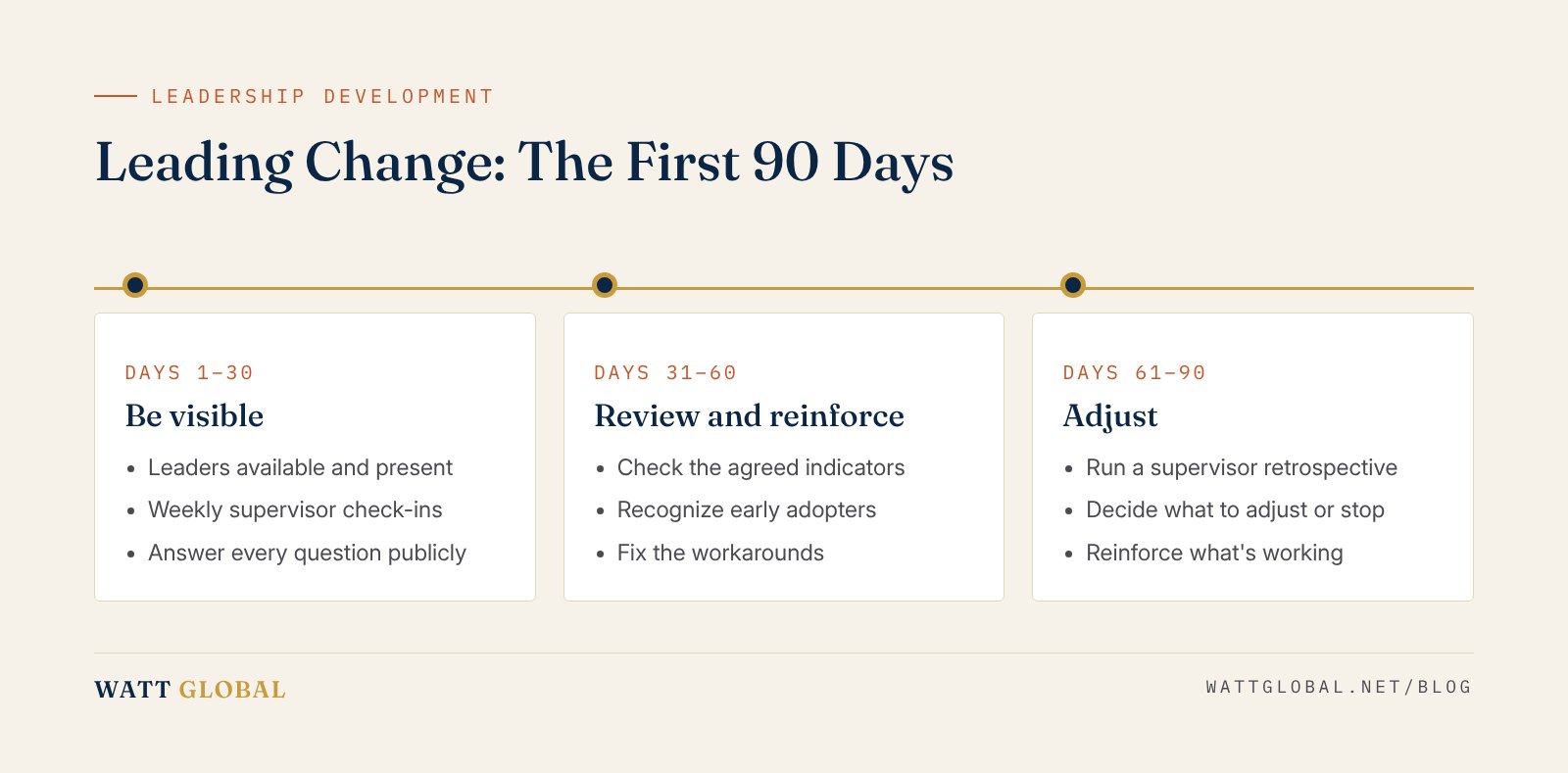
This rhythm mirrors the Transformation stage of the WATT Framework: review progress against the goals you agreed on, then apply what you learn. Change that isn't reviewed tends to drift back to the old way of working.
Lead the change you can actually deliver
A change readiness checklist won't make a hard change easy. What it will do is show you, before you announce, where the change is most likely to break: unclear purpose, misaligned leaders, overloaded teams, missing skills or no way to hear what's going wrong. Each of those can be fixed if you see it in time.
Change readiness assessments are part of WATT Global's consulting work, alongside the supervisor and team training that helps a change land on the floor. If you're planning a change and want a second set of eyes on your readiness — or you're already mid-rollout and it isn't sticking — talk with our team about where to focus first. And if you'd like a quick personal read on where you stand as a leader, the free WATT Assessment takes about four minutes.